IESP — International Etruscan Sigla Project
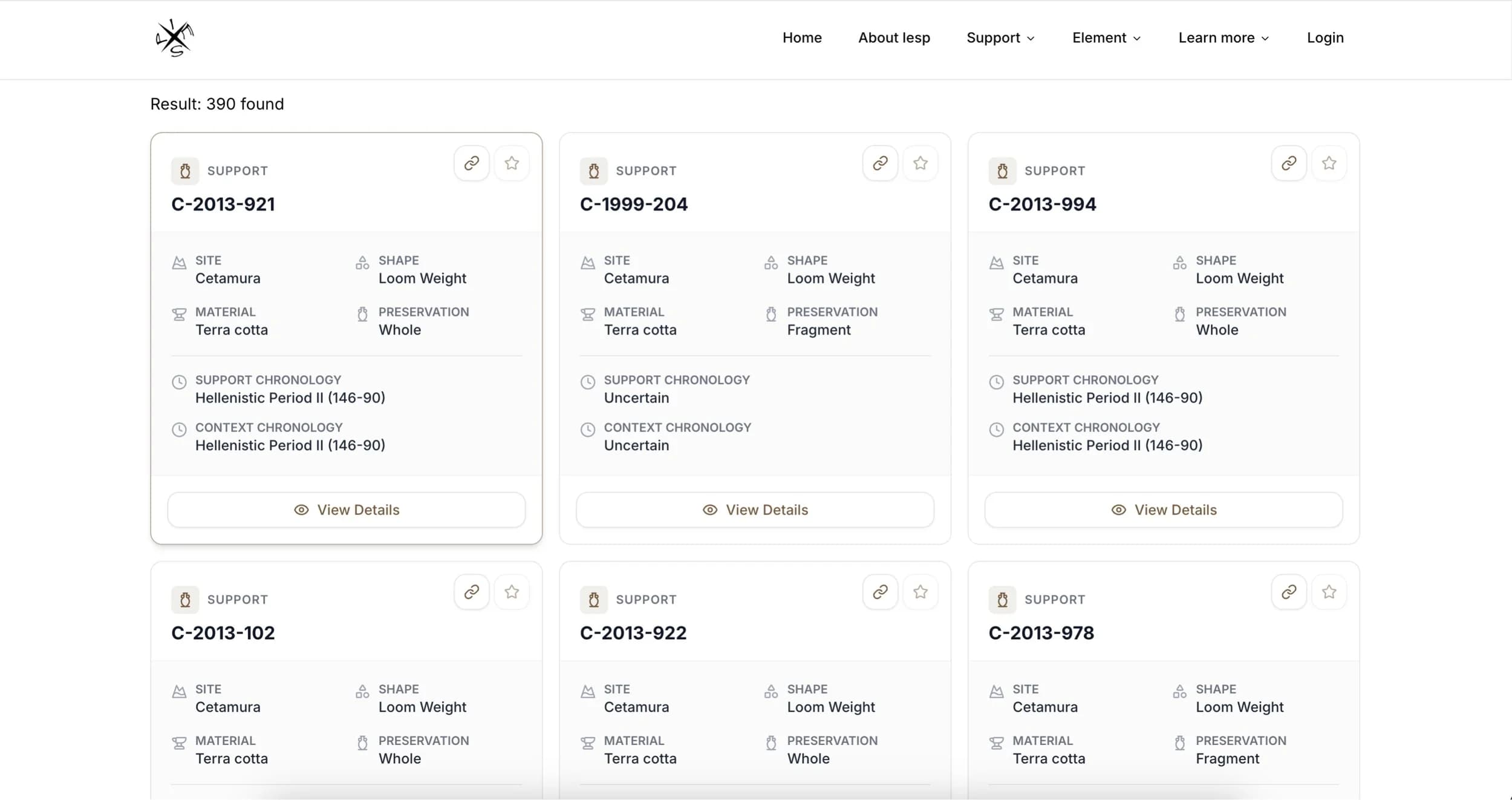
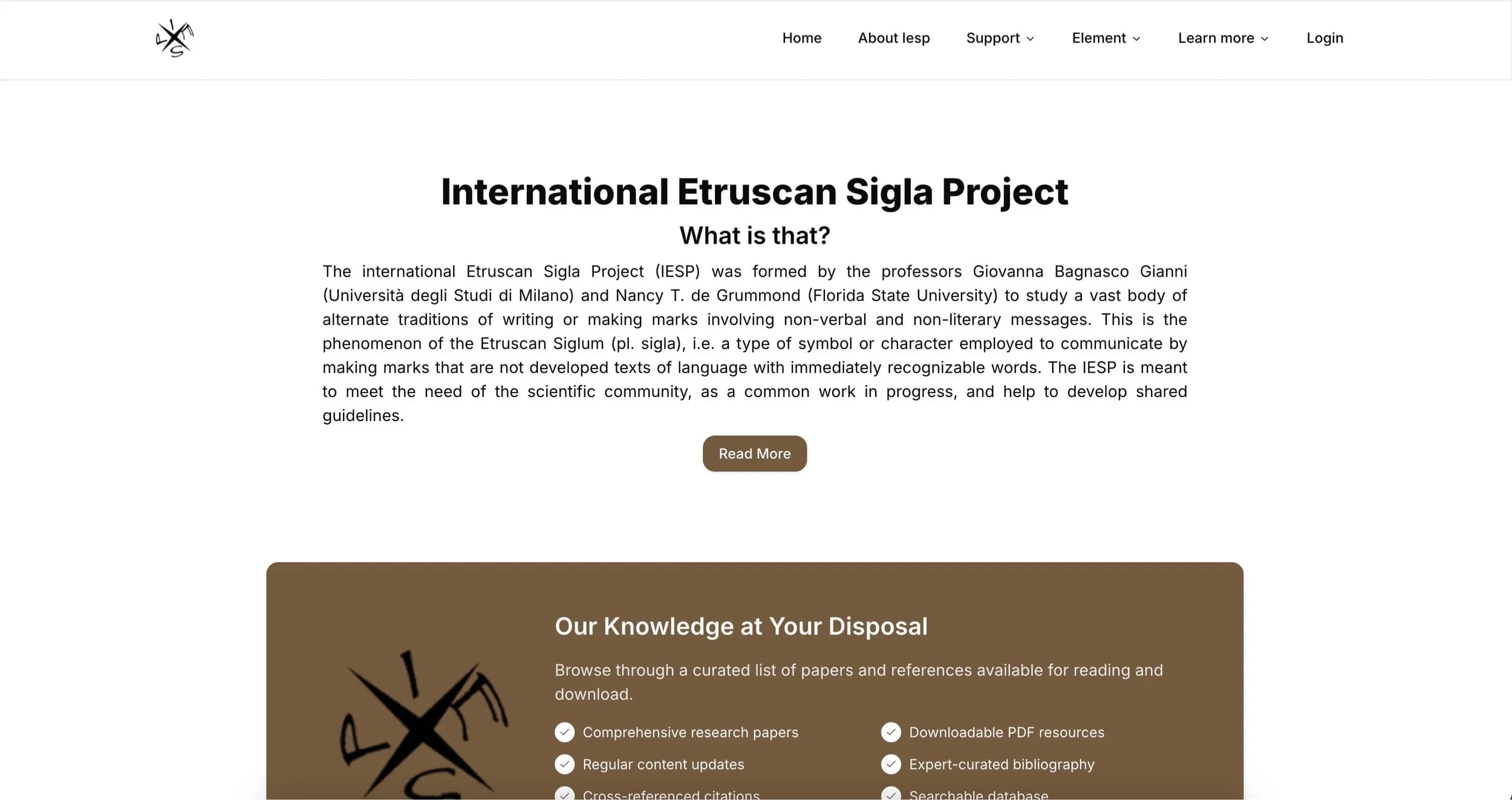
IESP is a collaborative online archive cataloguing non-verbal inscribed signs (sigla) found on Etruscan artefacts, launched in 2010 by Florida State University and the University of Milan. Developed in collaboration with the University of Milan's Computer Science Department, the platform enables scholars worldwide to study the distribution and significance of Etruscan sigla — marks such as crosses, anchors, double axes, and tridents appearing across thousands of objects spanning the entire arc of Etruscan civilisation.
What we built
- Online collaborative archive integrating multiple institutional databases of sigla into a single, unified system.
- Visual matching engine for comparing sign images and identifying groups of similar sigla across different artefacts and collections.
- Geographic mapping via Google Maps, providing detailed atlases of the territorial distribution of sigla across Etruria, the Po Valley, and the Gulf of Naples.
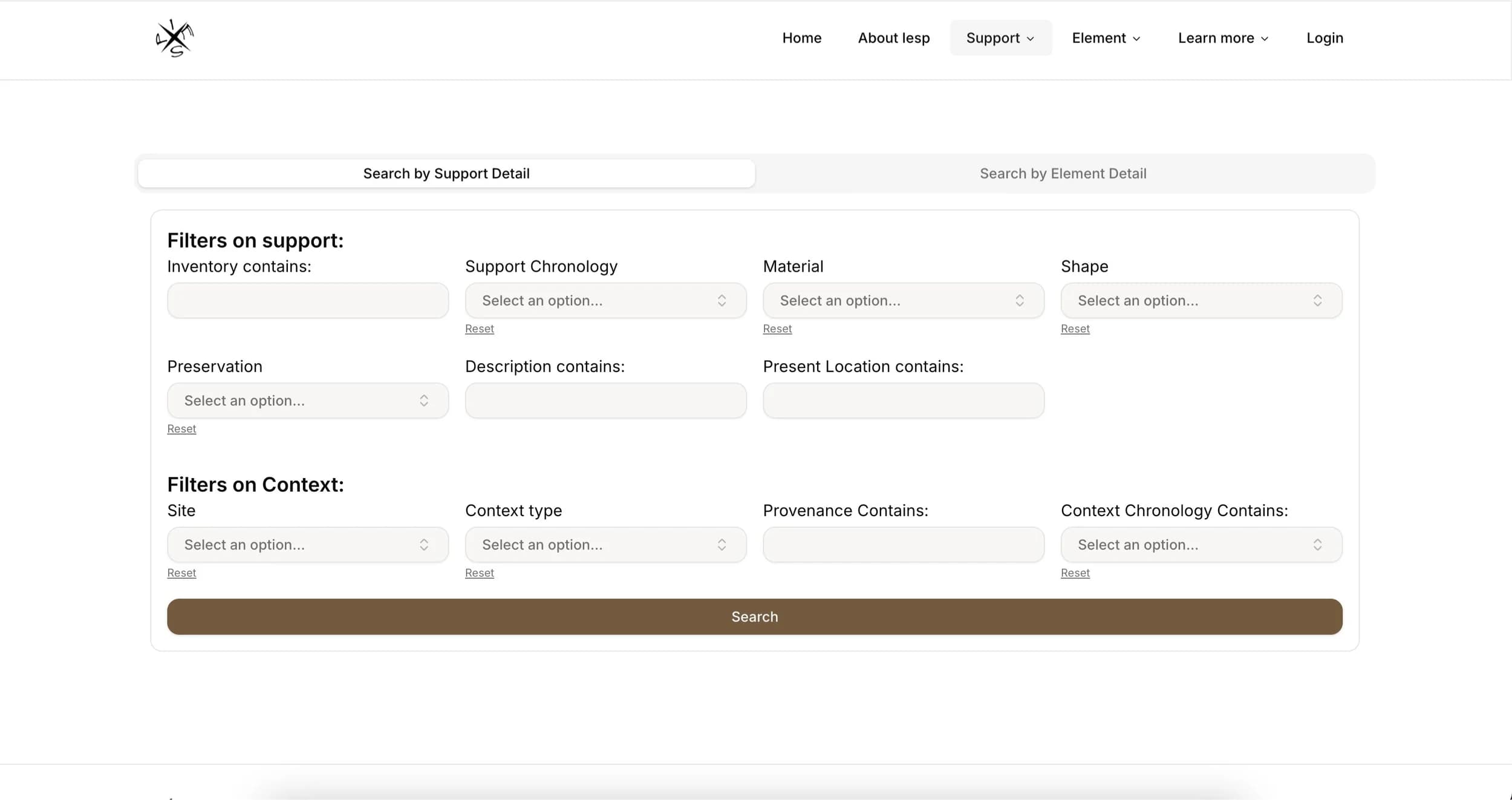
- Advanced classification system covering 48 materials, 215 support shapes, 29 alphabets, 26 epigraphic symbols, 20 chronological periods, and 15 relationship types.
- Collaborative access management for international research teams with role-based validation workflows.
Outcomes
- 1,268 validated epigraphic elements catalogued from 20 archaeological sites.
- 880 bibliography references linked to the archive, making IESP one of the most comprehensive epigraphic bibliographic resources for Etruscan studies.
- Active collaboration from multiple national and international archaeological teams operating at key Etruscan sites.