Email Quotes, Written and Sent by AI
Around thirty emails an hour, all from travel agencies asking for a quote for their own clients. Each one needs someone to open the price lists, find the right service, put the numbers together and reply. Every day, for hours.
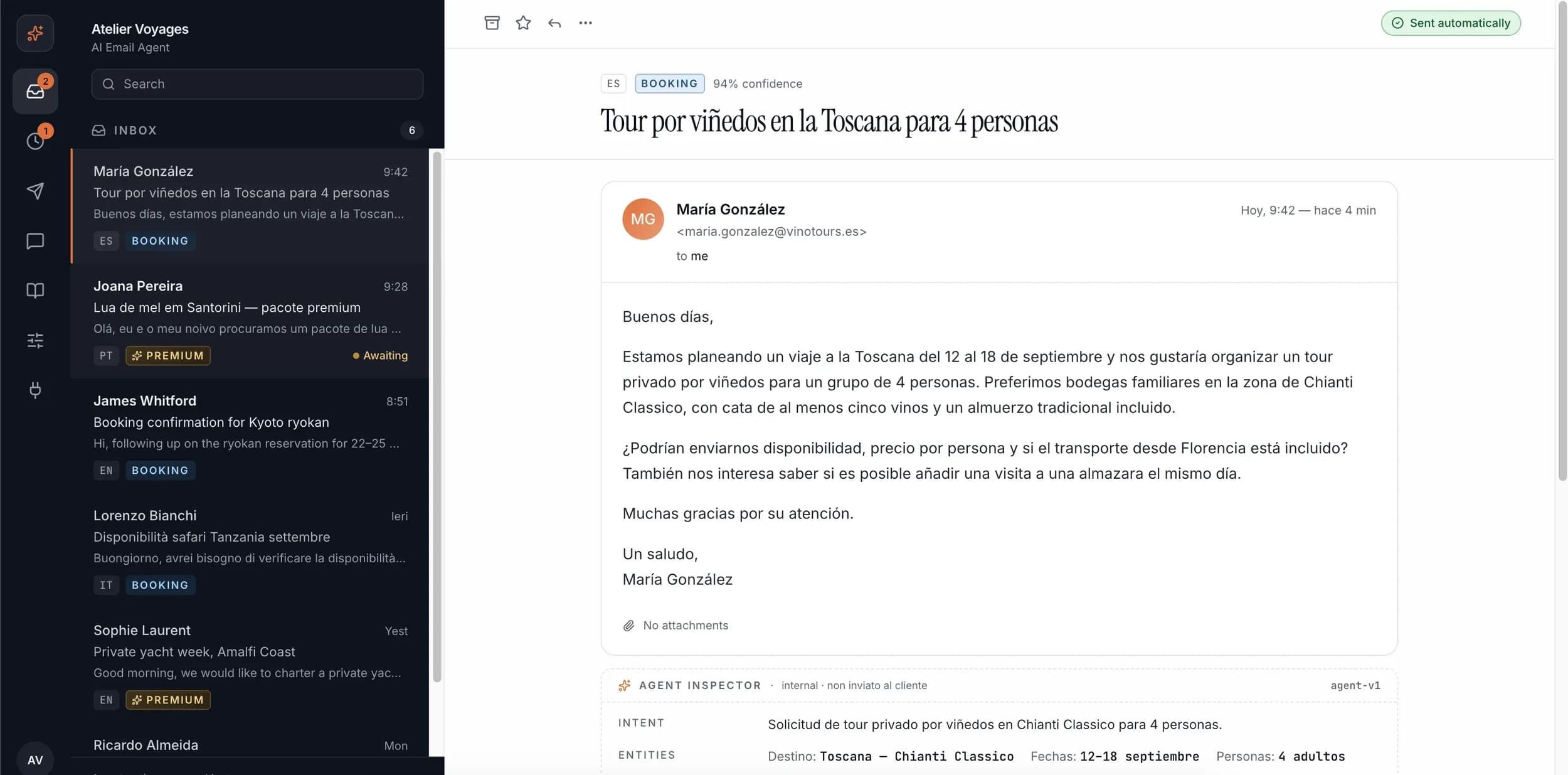
The system reads incoming email, recognises what is being asked, and builds the reply from the agency's price lists. Standard requests, when the classification is clear-cut, go out on their own within thirty seconds of arriving. High-value ones stop and wait for a person.
What we built
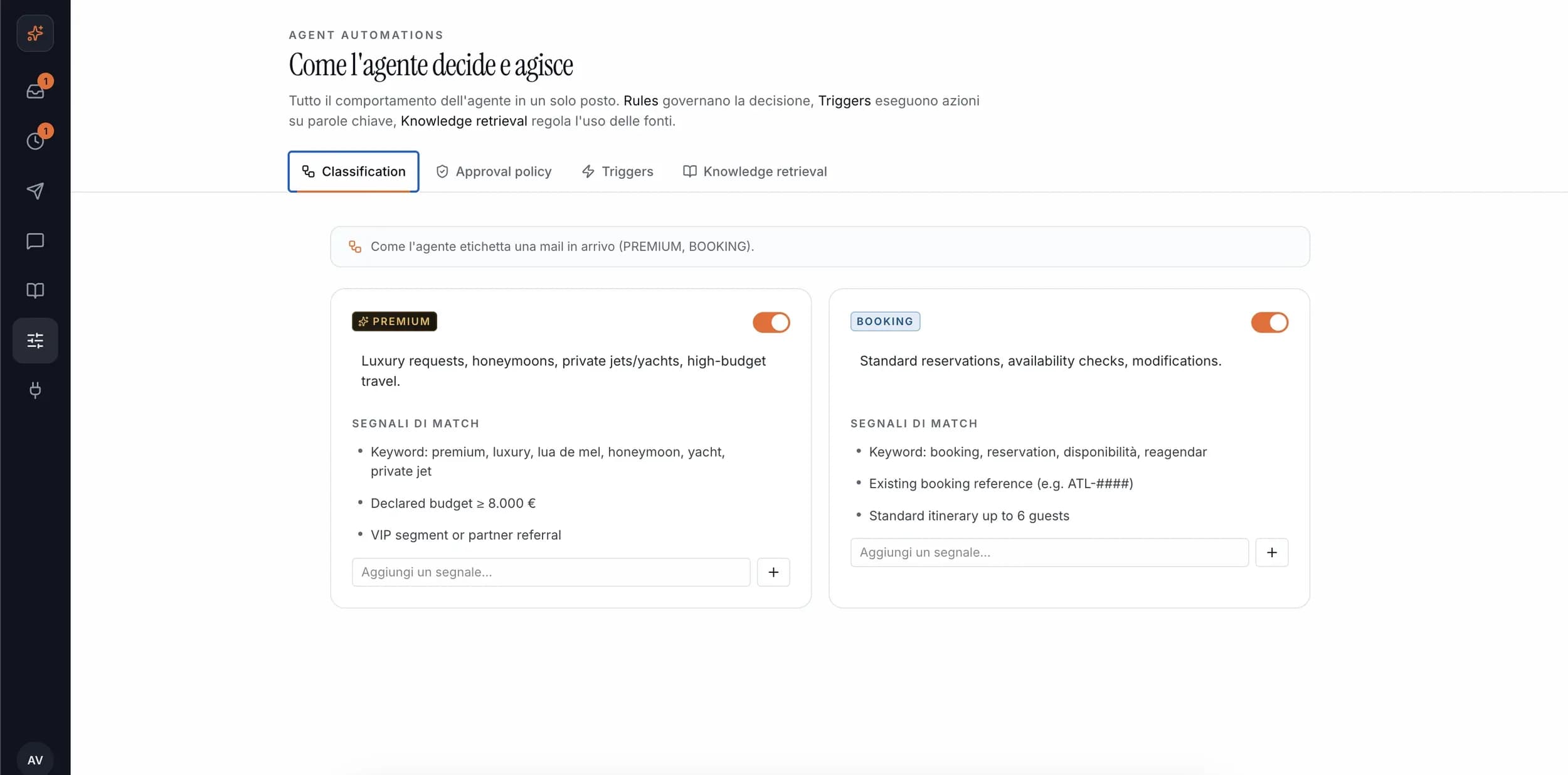
- Requests split by what is at stake. The agent labels every incoming email:
BOOKINGcovers standard reservations, availability checks and changes;PREMIUMcovers honeymoons, private jets and yachts, declared budgets above eight thousand euros, VIP clients. The signals behind a label are written down, visible and editable by the agency: they are not buried inside a prompt. - Four languages in one queue. Spanish, Portuguese, English, Italian: the label and the reply follow the language of the request, with no separate queues to manage.
- Quotes built from the real price lists. The prices do not come out of the model: they come out of the lists the agency uploads, the same ones a person would have opened by hand. When a list changes, the quotes change, with no work on the system.
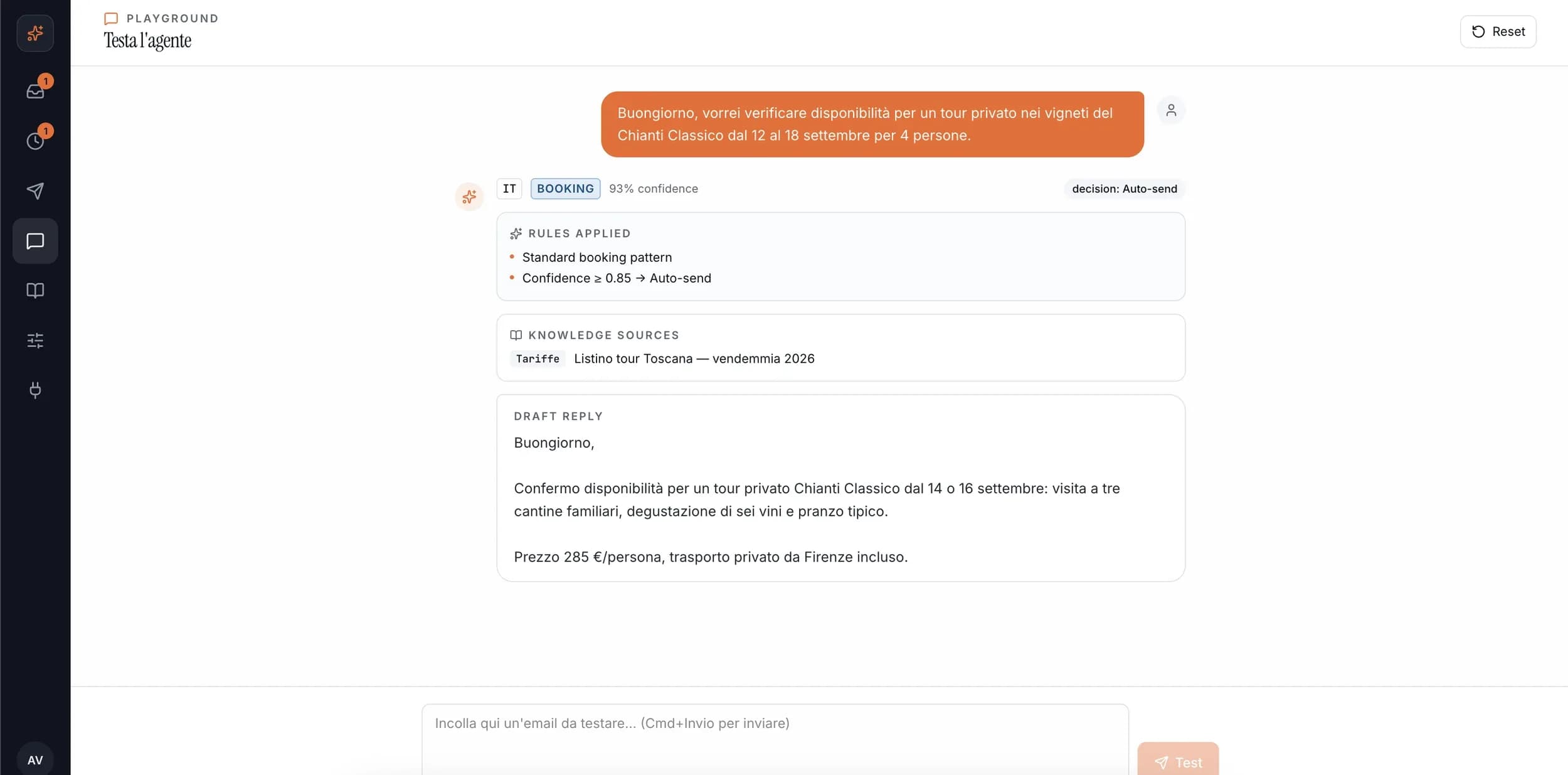
- A threshold, not a case-by-case call. Above 0.85 confidence, on a standard label, the reply goes out on its own. Below that threshold, or on a premium label, it holds and waits. The threshold belongs to the agency: raise it the day you want more control, lower it when the numbers justify it.
- What it does not know, it says. A request with no match in the price lists — a service outside the catalogue, an impossible date — does not produce an invented quote. It produces a flag, and the email passes whole to someone who can handle it.
- Every decision inspectable. For each email, the recognised intent, the extracted figures, the rules applied, the sources consulted and the decision taken all stay on record. When a reply is wrong, you can see which rule sent it, and fix that rule.
How it runs in production
Thirty emails an hour means the volume does not wait. A system that stops on an error and restarts from the beginning, at that rate, builds a backlog in an afternoon.
Each email is processed independently and resumes where it left off: a failure on request number twelve does not touch the other twenty-nine, and number twelve is picked back up rather than dropped. That is the difference between an automation that holds real volume and one that works until something goes wrong.
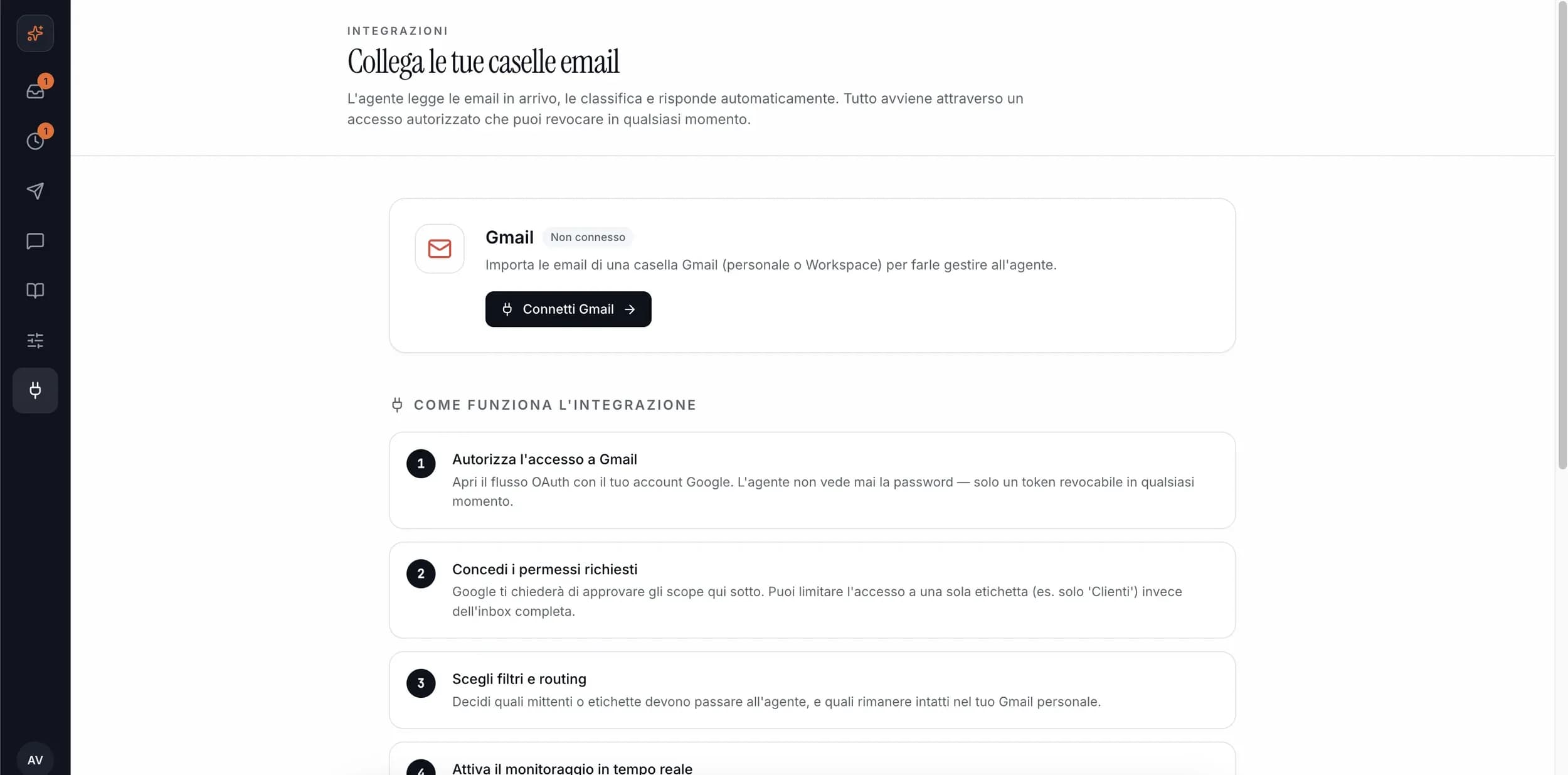
The mailbox is connected through an OAuth token the agency can revoke at any time, and it can be restricted to a single label instead of the whole inbox. Before a rule changes in production it gets tried in the playground: paste in a real email, see the decision the agent would take, with nothing actually sent.
Where a person decides
Not on everything: on what carries a consequence. An availability request for a catalogue itinerary, recognised with margin, does not get better because someone re-reads it — the re-read only slows it down. An eight-thousand-euro honeymoon does, and that one stops.
The boundary is stated, not implied. The premium label, the confidence threshold, the approval rules all live in a screen the agency opens and edits whenever it wants. Moving that boundary stays the agency's decision, not a side effect of the model.
The outcome is not one person fewer. It is the same person, no longer transcribing price lists for the obvious requests, with time for the ones where their judgement is worth something.